Events
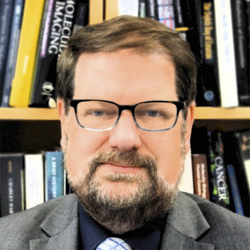
BME Seminar Series - Dino Di Carlo, UCLA
McCormick - Biomedical Engineering Department (BME)
4:00 PM
//
L361, Technological Institute
Details
Building Laboratories on Motes of Dust to Scale Life Science Research 1000-fold
Abstract
Modern biology increasingly depends on running huge numbers of experiments to understand how living cells work and how we can better treat disease. But today’s laboratory tools were largely designed for experiments done one at a time, or at best, in small batches. In this talk, I will describe our efforts to rethink the laboratory itself by shrinking it down to the size of a single microscopic particle. We are developing what we call “Lab on a Particle” technologies: millions of tiny, engineered particles—smaller than a grain of dust—that each act as a self-contained laboratory. These particles can hold individual cells, capture molecules they produce, and carry out biochemical reactions, all while being processed and sorted using standard lab instruments. In effect, each particle becomes a smart test tube that runs its own experiment in parallel with millions of others. I will first explain how these particles are designed and manufactured, and how we program their surfaces to interact with cells and biomolecules. I will then show how this approach enables powerful new applications, including discovering therapeutic antibodies and T-cell receptors, studying how pairs of cells communicate, and evolving proteins with new functions. By compressing entire laboratory workflows onto individual particles, these technologies allow us to perform experiments at scales that were previously impractical or impossible, often increasing throughput by orders of magnitude. This shift not only accelerates drug and diagnostic discovery, but also generates the large, functionally rich datasets needed to train modern artificial intelligence models in biology. Together, “Lab on a Particle” systems offer a path toward faster, more scalable, and more insightful life science research.
Bio
Dino Di Carlo is the Armond and Elena Hairapetian Professor of Bioengineering at UCLA, serial entrepreneur and inventor. He serves in academic leadership roles as the Chair of the Bioengineering Department and Deputy Director of a National Science Foundation Engineering Research Center. He is an author on >200 peer-reviewed articles and an inventor on >80 issued patents in the U.S. and across the world. His research focuses on the interface between micro & nanotechnology, information technology, and the life sciences. He also has served in business leadership roles. He co-founded several companies in the diagnostics, medical device, and biotech/pharmaceutical industries and continues to serve on the board of directors of many of these companies, and as a scientific advisor and mentor to startups, including Cytovale, Tempo Therapeutics, and Partillion Bioscience. His inventions are incorporated into commercial medical devices, such as Cytovale's IntelliSepTM test, which is the first test approved by the FDA to detect sepsis early in the emergency department, and Tempo Therapeutics’ MAP Wound MatrixTM, which has shown efficacy in humans to regenerate tissue in large wounds. Other inventions from his lab scale and automate life science research, such as Nanovial technology from Partillion Bioscience, which allows antibody drug developers to rapidly discover new antibody sequences, accelerating life-saving drugs to the clinic. He has received numerous awards, including the Presidential Early Career Award for Scientists and Engineers (PECASE), the highest honor bestowed upon young scientists and engineers in the U.S.
Time
Thursday, January 22, 2026 at 4:00 PM - 5:00 PM
Location
L361, Technological Institute Map
Contact
Calendar
McCormick - Biomedical Engineering Department (BME)
BME Seminar Series - Jianyi (Jay) Zhang, UAB
McCormick - Biomedical Engineering Department (BME)
4:00 PM
//
L361, Technological Institute
Details
Heart Regeneration and Graft Associated Arrythmia in Large Mammals
Abstract
Despite ongoing improvements in the management of cardiac disease, patients with severe acute myocardial infarction (AMI) often progress to end-stage congestive heart failure, which remains one of the most significant problems in public health. From molecular
and cellular perspective, heart failure is caused by the loss of cardiomyocytes—the fundamental contractile units of the heart. Mammalian cardiomyocytes (CM) exit the cell cycle shortly after birth and, consequently, cardiomyocytes in the hearts of adult
mammals cannot proliferate in response to injury. However, we have shown that when MI was induced in the hearts of newborn pigs on postnatal day 1 (P1), the animals recovered with significantly decreased scar size and residual fibrosis in the myocardium, and that the repair process was accompanied by increases in the expression of markers for cell-cycle activity in cardiomyocytes. Furthermore using a double injury model, when apical resection surgery (AR) was performed on P1 and AMI was induced on postnatal day 28 (P28) in the same large mammal, cardiomyocytes proliferated in response to the second injury and regenerated the damaged myocardium on P56; thus, AR on P1 extended the time window of cardiomyocyte proliferation and cardiac repair through at least to P28. We have also developed a novel cell-cycle–specific bioinformatics algorithm (CSA) for analyzing single-nucleus RNA sequencing (snRNAseq) data, which enables us to more precisely evaluate cell-cycle activity in subpopulations of cardiomyocytes. We have recently established a novel Cardiomyocyte-specific Modified mRNA Translation System (CM-SMRTs) for gene targeting, which was inspired by the effectiveness and safety of mRNA-based vaccines against SARS-CoV-2. The CM SMRTs based delivery system could efficiently target the key transcription regulator(s) and “turn-back-the-clock” of CM cell cycle, and address an unmet clinical need by providing an efficient and titratable method for transiently modifying gene expression
specifically in cardiomyocyte.
Participants will be able to discuss and explain the current understanding of the major roadblocks in myocardial regeneration, and the potential approaches to overcome these roadblocks. Participants will also share their knowledge and interests in pursuing novel
applications in this emerging field of modRNA therapeutics.
Bio
Jianyi “Jay” Zhang, M.D., Ph.D., is an international leader in myocardial bioenergetics, and cells/cell-products for cardiac repair. He is a tenured Professor of Medicine and of Engineering; T. Michael and Gillian Goodrich Endowed Chair of Engineering Leadership; and the Chair of the Department of Biomedical Engineering (BME). He came to UAB in October 2015 after he was chosen in a national search to lead the UAB BME department from the University of Minnesota Medical School, where he was the Engdahl Family Foundation Chair in Cardiovascular Regenerative Therapies, in addition to being a tenured professor of medicine, of biomedical engineering, of electrical engineering, and computer engineering. Zhang earned his M.D. from Shanghai Medical University in 1983 and his Ph.D. in biomedical engineering from the University of Minnesota in 1992. Since his arrival at UAB, the Department of Biomedical Engineering rose to the rank of top 10th in the nation in NIH funding (Blue Ridge Institute) in the past 7 years consecutively under Zhang’s leadership. Dr. Zhang has mentored 21 PhD students earned their PhD degree from University of Minnesota or UAB. Dr. Zhang’s research interests include iPS technology, heart failure, cell-products for cardiac repair. He is currently the PI of NIH multiple R01 grants, one NIH U01 grant, and one PPG that through 2027. The Zhang lab has published >200 papers in high impact journals including Circulation, Circulation Research, Cell Stem Cell, Science Translational Medicine research; he has trained more than 90 trainees, and led 18 students earning their Ph.D. He is Charter Reviewer on NIH study sections (through 2026); editorial board member for Circulation, Circulation Research, and others.
Time
Thursday, January 29, 2026 at 4:00 PM - 5:00 PM
Location
L361, Technological Institute Map
Contact
Calendar
McCormick - Biomedical Engineering Department (BME)
The Monthly Seminar on Physical Genomics: DNA Mechanics And Nucleosome Condensability As Biophysical Backdrop Of Genome Functions
Center for Physical Genomics and Engineering (CPGE)
12:00 PM
Details
DNA Mechanics And Nucleosome Condensability As Biophysical Backdrop Of Genome Functions
Taekjip Ha, PhD
Mutations primarily function through changing amino acids encoded and altering transcription factor binding. Likewise, epigenetic modifications function through changing interactions with readers, writers, and erasers of epigenetic marks. However, it has been recognized that mutations may act through changes in DNA mechanics, and histone modifications may also directly modify nucleosome biophysical properties. Here, I will present our own line of research using single molecule methods and genome-scale sequencing-based analysis to quantify the roles and magnitudes of DNA mechanics and nucleosome condensation in genome and chromatin functions.
About Taekjip Ha
Dr. Taekjip Ha is George D. Yancopoulos Professor of Pediatrics in honor of Frederick W. Alt at Harvard Medical School and Director and Senior Investigator of the Program in Cellular and Molecular Medicine at Boston Children’s Hospital. He has been an investigator with the Howard Hughes Medical Institute since 2005. He received a bachelor’s degree in Physics from Seoul National University in 1990 and a PhD in Physics from University of California at Berkeley in 1996. After postdoctoral training at Stanford, he was a Physics professor at University of Illinois at Urbana-Champaign (2000-2015), where he co-directed an NSF Physics Frontier Center, and Bloomberg Distinguished Professor at Johns Hopkins University (2015-2023). He is a member of the National Academy of Sciences and the National Academy of Medicine, and a fellow of the American Academy of Arts and Sciences. He received the Ho-Am Prize in Science (2011), Kazuhito Kinosita Award in single molecule biophysics (2018) and Barany Award for young investigators (2007). He was named a Searle Scholar (2001) and Sloan Fellow (2003). He has served on Editorial Boards for Science (2011-present), Cell (2009-2020) and eLife (2014-2020). He co-chaired the National Academies committee Toward Sequencing and Mapping of RNA Modifications (2022-2024). He served as President of the Biophysical Society (2023-2024). Dr. Ha’s current research theme is “genome maintenance at higher resolution”. “Higher resolution” here refers to advances his team pioneered in multiple axes, including time resolution, spatial resolution, single molecule and single cell resolution, and single base pair resolution. His biological focus is genome maintenance, i.e. how the genome is accurately duplicated and repaired for preserving genomic integrity. He advanced CRISPR-based tools in terms of time and space resolution as well as multiplexing and obtained novel insights about repair of CRISPR-generated DNA damage. Because genome maintenance occurs in the context of chromatin and 3D genome, and in the presence of ongoing nuclear processes such as transcription and epigenetic regulation, his team has also been studying how DNA sequences and modifications as well as histone modifications can act directly through changes in biophysical properties of DNA and chromatin such as DNA flexibility and nucleosome stability and condensability. Finally, he used biophysical properties of DNA to develop single molecule force sensors and determined the single molecule force loading rate in cells.
Time
Friday, January 30, 2026 at 12:00 PM - 1:00 PM
Contact
Calendar
Center for Physical Genomics and Engineering (CPGE)