

Events
Past Event
Undergraduate Quantum Summer School
McCormick School of Engineering and Applied Science
All Day
//
Ford Motor Company Engineering Design Center
Details
Innovation in Quantum Pedagogy, Application, and its Relation to Culture (IQ-PARC), funded by the Department of Defense — National Defense Education Program, is extending an invitation to underrepresented students nationwide (including military-connected students) to participate in a summer school focused on quantum technologies, to be held at Northwestern University. Join us for presentations by faculty and industry partners introducing quantum technologies, cutting-edge research areas, and related job opportunities particularly in the areas of national security.
This effort aims to foster an inclusive environment that encourages participation from all corners of the academic community. Successful applicants will receive up to $1,000 USD to cover travel and lodging expenses in Evanston, IL.
Priority application deadline: May 15, 2024.
Decisions will be sent by June 15, 2024.
Time
Wednesday, August 14, 2024
Location
Ford Motor Company Engineering Design Center Map
Contact
Calendar
McCormick School of Engineering and Applied Science
Seeing the Invisible: Real-Time Vascular Imaging with Wearable Optical Tomography
McCormick - Biomedical Engineering Department (BME)
4:00 PM
//
M345, Technological Institute
Details
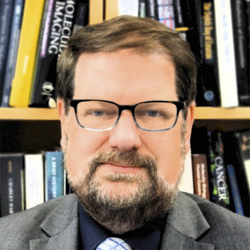
Presented by Dr. Andreas Hielscher, Professor and Chair of Biomedical Engineering at NYU
Vascular Optical Tomographic Imaging (VOTI) is an emerging non-invasive imaging modality that enables real-time, three-dimensional mapping of key physiological parameters. As part of the BME Seminar Series, Dr. Hielscher shares recent clinical results and explores how VOTI is becoming a practical bedside and even at-home tool, thanks to advancements in flexible electronics and textile-integrated optoelectronics.
Attend in person or register to watch on Zoom.
Time
Thursday, October 29, 2026 at 4:00 PM - 5:00 PM
Location
M345, Technological Institute Map
Contact
Calendar
McCormick - Biomedical Engineering Department (BME)
The Monthly Seminar on Physical Genomics: Gene Dosage Control And Histone Acetylation: Epigenetic Mechanisms In Health And Disease - Asifa Akhtar, PhD
Center for Physical Genomics and Engineering (CPGE)
12:00 PM
Details
Friday, October 30, 2026 @ 12pm CT
Live on Zoom - Registration Is Free Here
Abstract
Gene dosage and epigenetic regulation are fundamental processes that ensure balanced gene expression in health and disease. Research from the Akhtar Lab has focused on lysine acetyltransferases, uncovering previously unrecognized functions of these epigenetic enzymes and their links to human disease. Central to this work is the histone acetyltransferase MOF, an evolutionarily conserved regulator of gene dosage control and housekeeping gene expression from fruit flies to mammals. MOF functions within two distinct chromatin-modifying complexes, MSL and NSL, which determine its substrate specificity and regulatory roles. The lab has demonstrated how MOF, within the MSL complex, regulates X chromosome gene dosage and has revealed the importance of roX long non-coding RNAs in directing the MSL complex specifically to the X chromosome. In parallel, studies on MOF led to the identification of the NSL complex as a key regulator of genome-wide transcription, mitochondrial physiology, and cellular metabolism. Increasing evidence further highlights the pathological significance of the human MSL and KANSL complexes, particularly in disorders associated with intellectual disability. Together, these findings underscore the central role of histone acetylation in coordinating chromatin regulation, dosage compensation, metabolic homeostasis, and disease. The latest advances and emerging insights into the epigenetic and metabolic functions of MSL and KANSL complexes will be presented.
About Asifa Akhtar
Asifa Akhtar received her PhD from the Imperial Cancer Research Fund in London in 1997. After a postdoc at the Adolf Butenandt Institute in Munich and the European Molecular Biology Laboratory (EMBL) in Heidelberg, Akhtar started her own research group at EMBL in 2001. In 2009, she moved to the Max Planck Institute of Immunobiology and Epigenetics in Freiburg, where she was appointed Director of the Department of Chromatin Regulation in 2013. In 2020, Asifa Akhtar became the first international female Vice President of the Biology and Medicine Section of the Max Planck Society. She was re-elected for a second term and will continue to hold this position until 2029. Akhtar has received numerous awards for her scientific excellence, leadership, and contributions to gender equality, including Germany’s highest scientific honor, the Gottfried Wilhelm Leibniz Prize in 2021. Other top achievements include the 2025 FEBS|EMBO Women in Science Award, election to the Royal Society in 2025, and the Baden-Württemberg Order of Merit in 2026.
Sponsored by the Center for Physical Genomics and Engineering, the Cancer and Physical Sciences Program at the Robert H. Lurie Comprehensive Cancer Center, and NIH Grants T32GM142604 and U54CA268084
Time
Friday, October 30, 2026 at 12:00 PM - 1:00 PM
Contact
Calendar
Center for Physical Genomics and Engineering (CPGE)
Regular registration for Winter quarter begins
University Academic Calendar
All Day
Details
Regular registration for Winter quarter begins
Time
Monday, November 16, 2026
Contact
Calendar
University Academic Calendar
Dissertation, PhD Final Exam, and change of grade forms due to TGS for Fall PhD candidates
University Academic Calendar
All Day
Details
Dissertation, PhD Final Exam, and change of grade forms due to TGS for Fall PhD candidates
Time
Friday, November 20, 2026
Contact
Calendar
University Academic Calendar
Thanksgiving Vacation begins at 6:00 PM (No classes, University offices closed)
University Academic Calendar
All Day
Details
Thanksgiving Vacation begins at 6:00 PM (No classes, University offices closed)
Time
Wednesday, November 25, 2026
Contact
Calendar
University Academic Calendar
Fall Classes Resume
University Academic Calendar
All Day
Details
Fall Classes Resume
Time
Monday, November 30, 2026
Contact
Calendar
University Academic Calendar
Fall classes end
University Academic Calendar
All Day
Details
Fall classes end
Time
Saturday, December 5, 2026
Contact
Calendar
University Academic Calendar
Fall Exams begin
University Academic Calendar
All Day
Details
Fall Exams begin
Time
Monday, December 7, 2026
Contact
Calendar
University Academic Calendar
Fall exams end
University Academic Calendar
All Day
Details
Fall exams end
Time
Saturday, December 12, 2026
Contact
Calendar
University Academic Calendar
Northwestern Engineering PhD Hooding and Master's Recognition Ceremony
McCormick School of Engineering and Applied Science
4:00 PM
//
Pick-Staiger Concert Hall
Details
The ceremony will take place on Saturday, December 12 in Pick-Staiger Concert Hall, 50 Arts Circle Drive.
Time
Saturday, December 12, 2026 at 4:00 PM - 6:00 PM
Location
Pick-Staiger Concert Hall Map
Contact
Calendar
McCormick School of Engineering and Applied Science